Service
Strip paint, stain, and decades of buildup from wood that deserves better — without sanding it away, burning it, or soaking it in chemicals.
Make It New Again
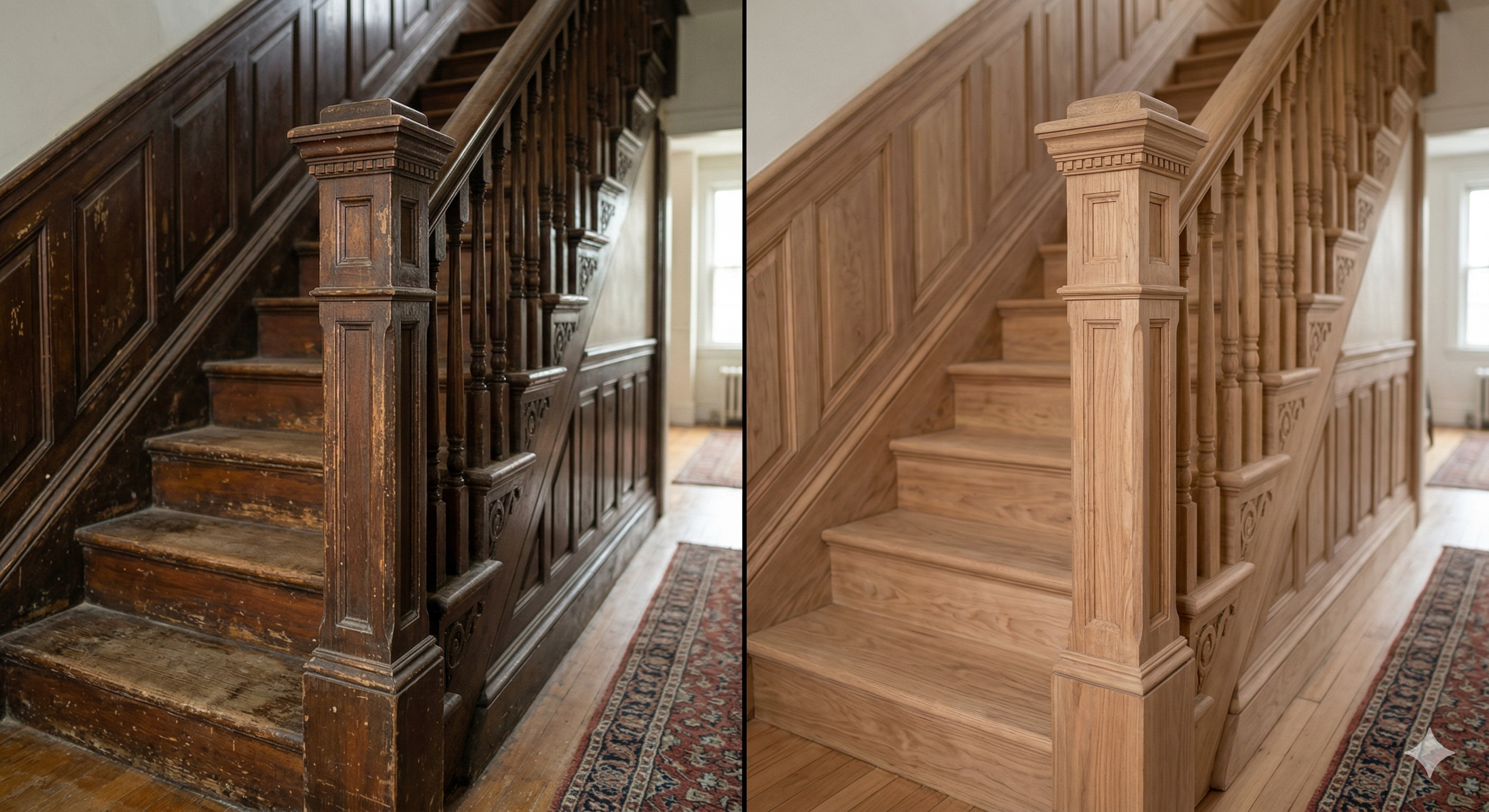
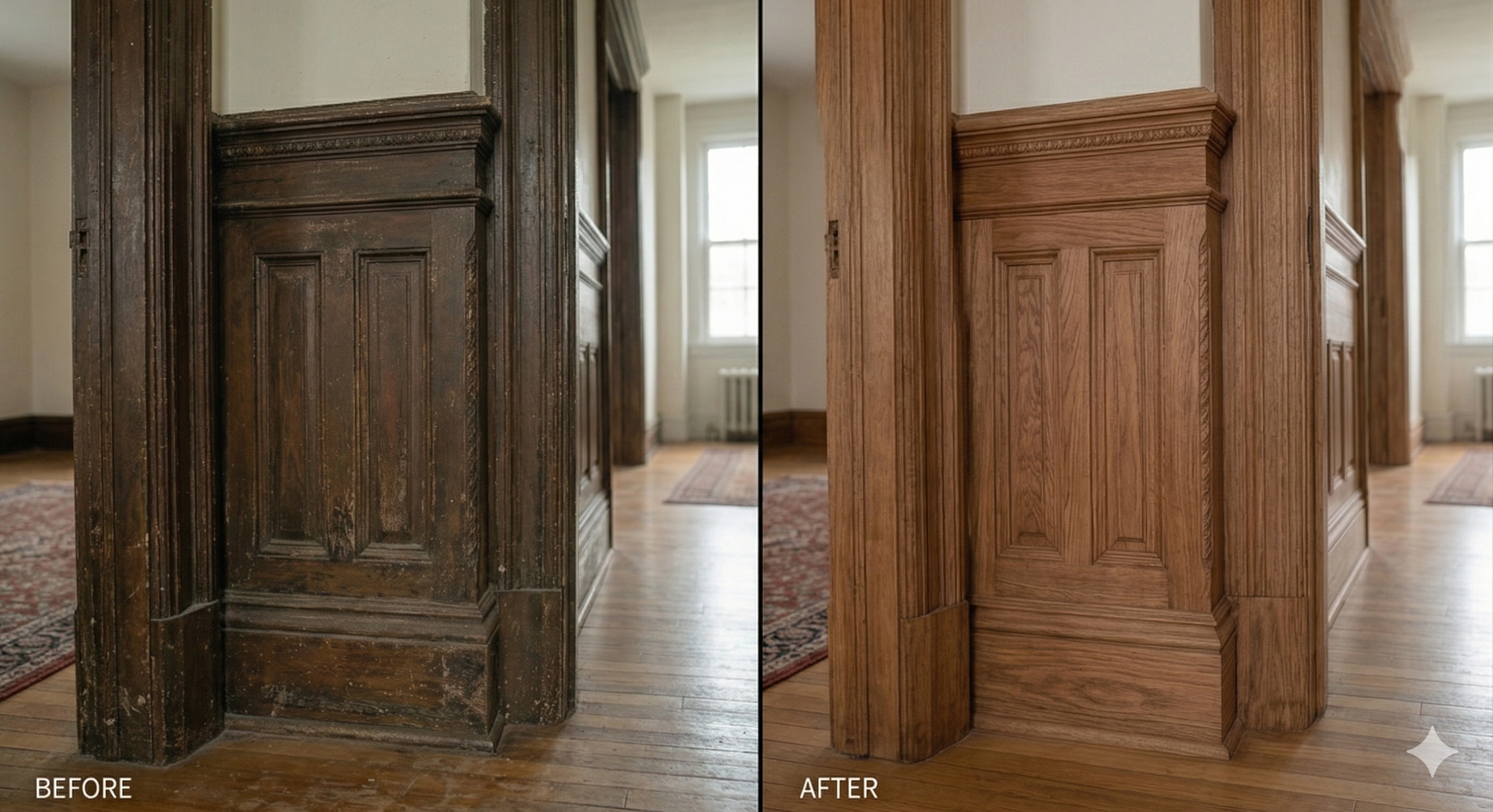
High-end homes along the Maine coast and mid-coast were built with original millwork, doors, floors, and trim that can't be replicated. When decades of paint and stain build up, the instinct is to sand — which removes wood — or strip chemically — which soaks and swells it.
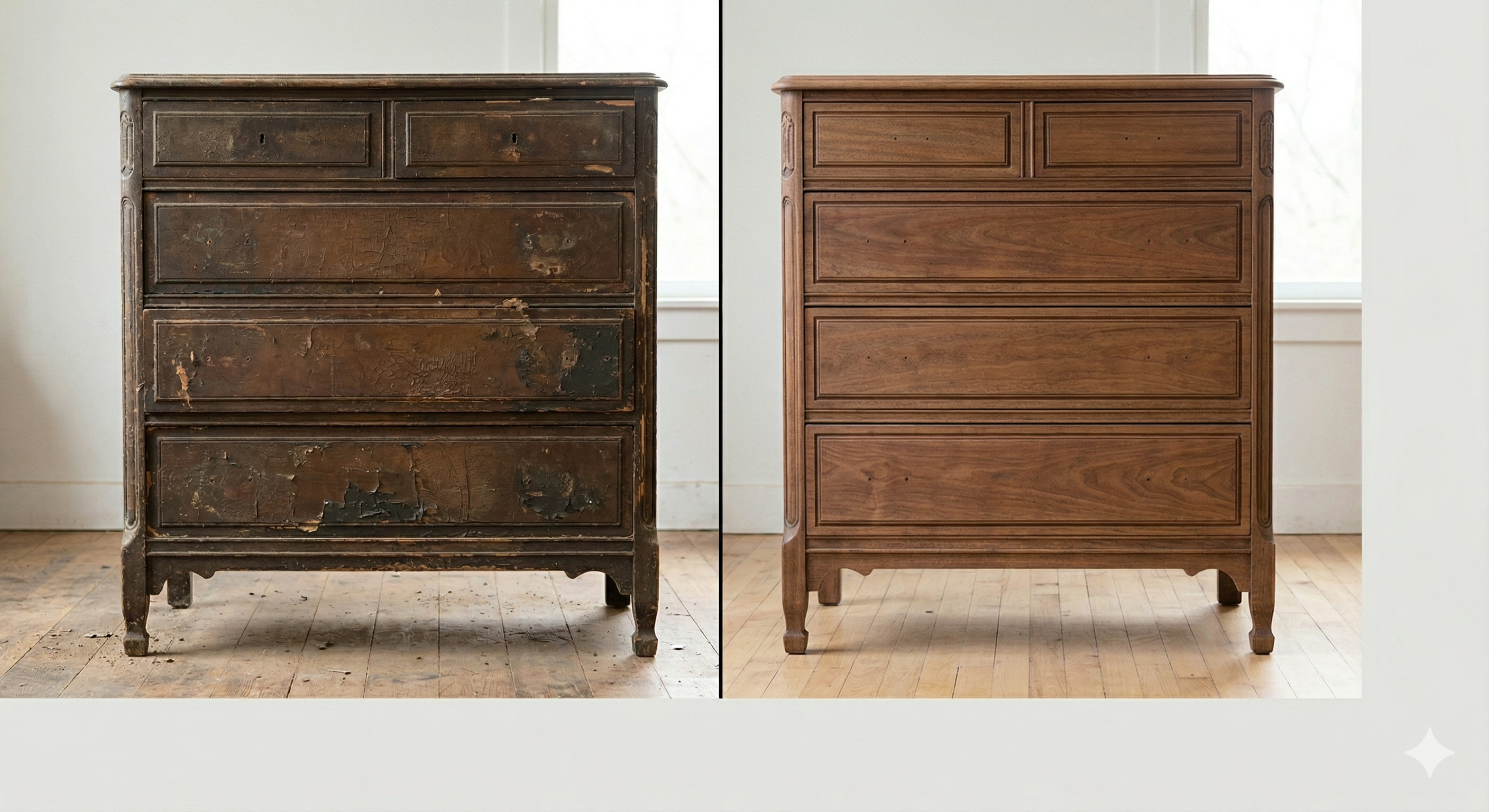
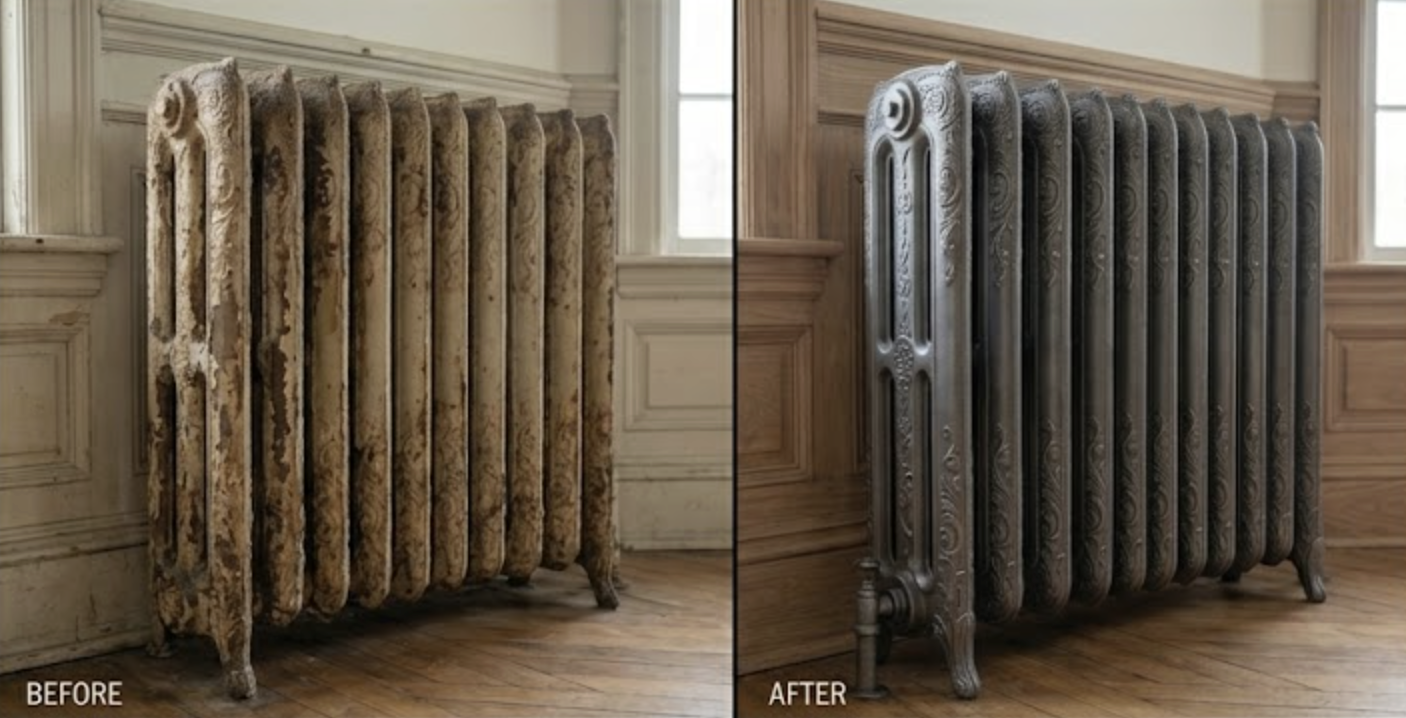
Laser takes off the coating and leaves the wood alone. The beam vaporizes the surface layer — paint, stain, grime, old varnish — while preserving the wood underneath exactly as it was.
The Work
The difference isn't just cosmetic — it's structural. Preserved wood lasts decades longer than repeatedly sanded or chemically stripped wood.
Historic Millwork
Antique Furniture
Cast Iron Radiator
A Problem Chemicals Can't Solve
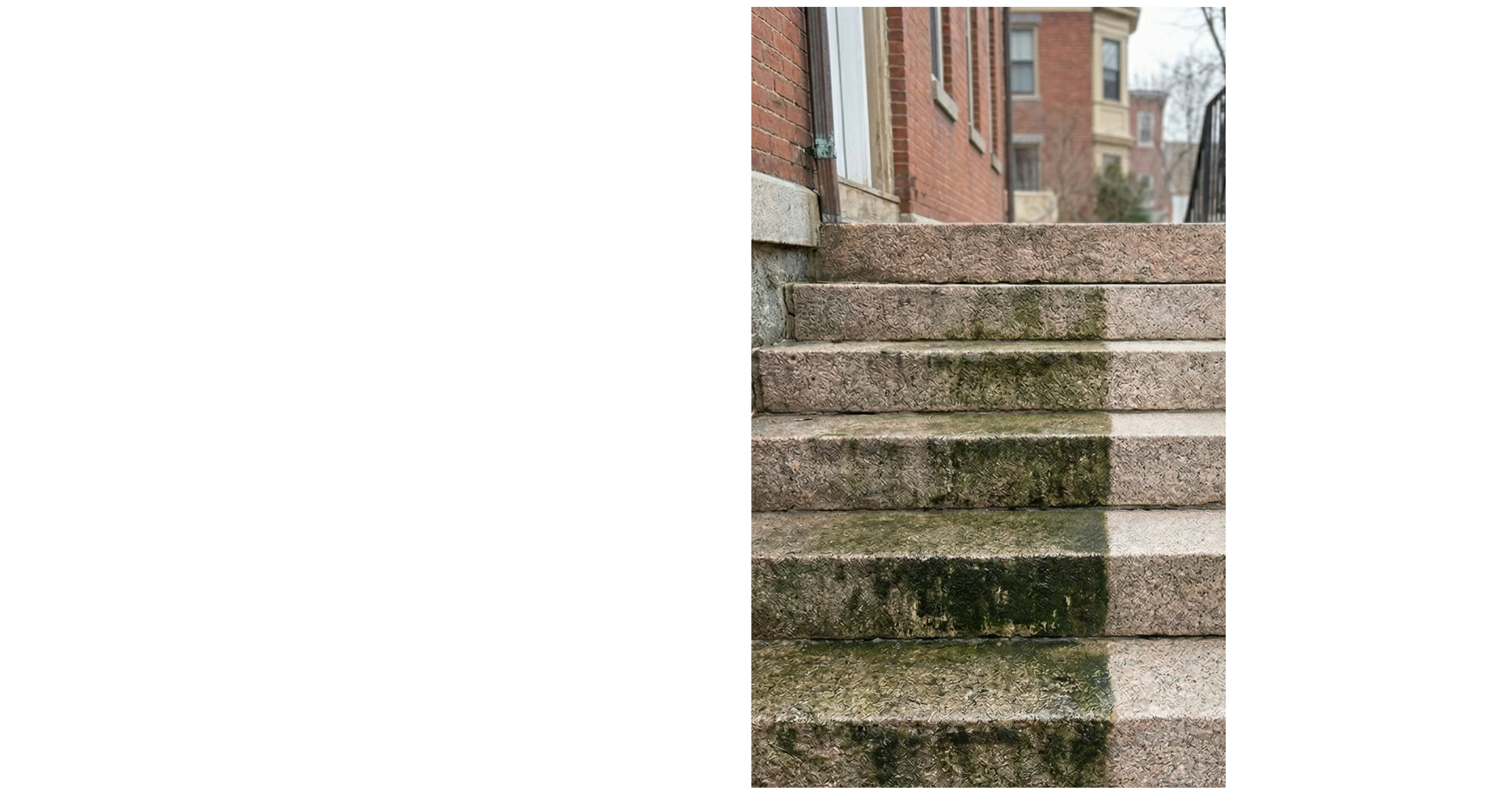
Biofilm — the dark, slick layer of bacteria, algae, and fungi that builds up on wood, stone, and masonry — won't come off with rinsing or bleach. It's anchored to the surface and keeps coming back.
Laser cleaning vaporizes biofilm at the source. Nothing regrows from what's been ablated. For granite steps, brick facades, and boat interiors where moisture is a constant, that difference compounds over time — longer intervals between cleanings, less surface degradation.
"Cleaning with laser light is both gentle and effective — a non-abrasive, non-contact method to remove harmful and unattractive deposits while leaving the underlying material untouched."
Collaboration
Laser stripping is a preparation step, not a finished product. We partner with interior designers, finish carpenters, restoration contractors, and painters to fit into existing project scopes. If you're working with a trade partner on a historic renovation or a high-end kitchen remodel, we can coordinate directly.
Ready to restore it
Tell us what you're working with — historic home, antique furniture, boat interior, or a cabinet project. We'll let you know if laser is the right approach.